Nordic melons are making a comeback – and may pave the way for sustainable farming of the future
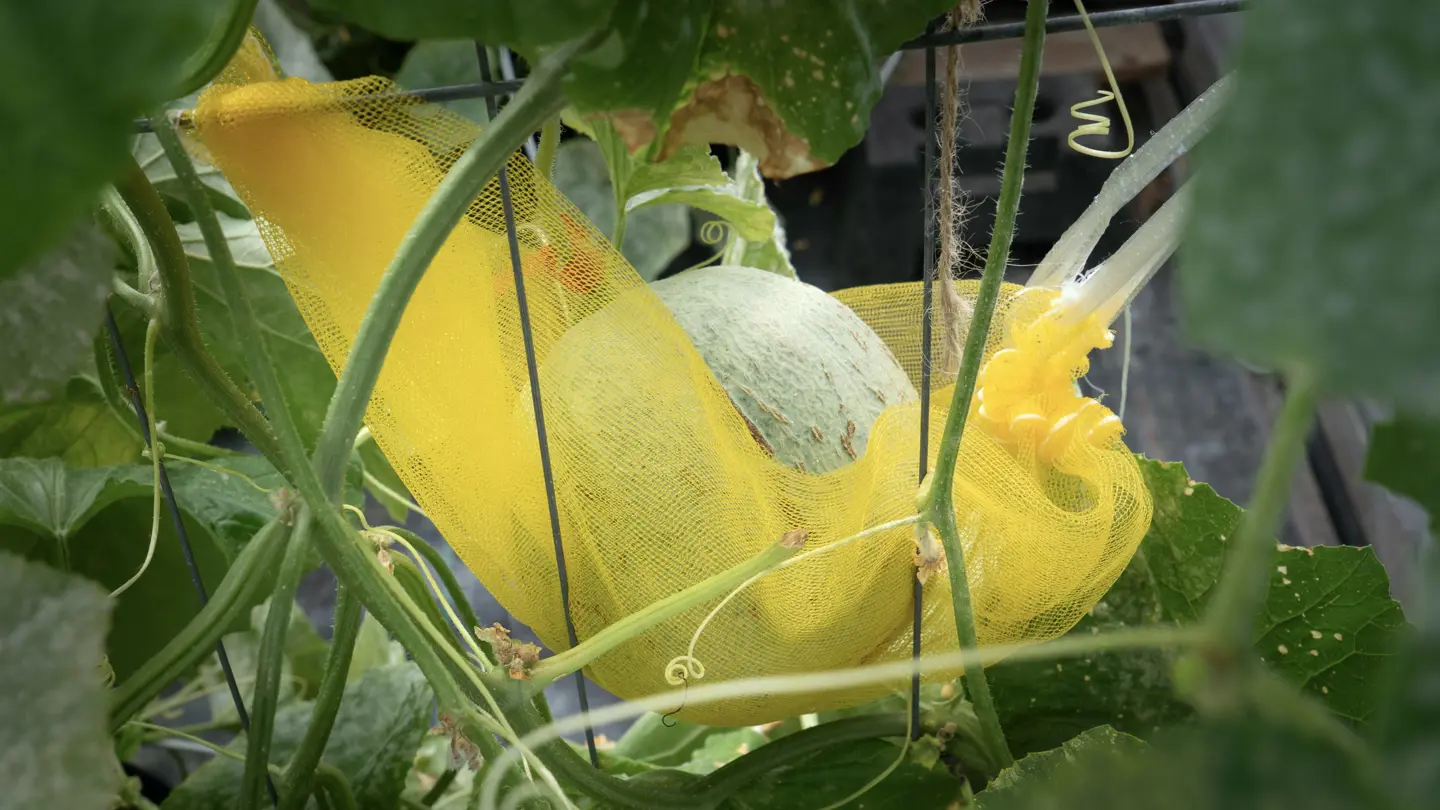
Melons in the Nordic region may sound like a passing trend, but in fact they represent a revival. As early as the 1600s, melons were cultivated at Nordic latitudes, and for several centuries they were a common feature in garden production. Today, interest is being rekindled, driven by the need for sustainable food production, increased self-sufficiency, and demand for locally grown food.
NordGen is now taking an important step to revive the Nordic melon tradition. The Nordic Melons project explores the potential of historic Nordic melon varieties, with the aim of making them relevant for future agriculture.
"As the climate crisis evolves, the focus on locally produced food and self-sufficiency is growing. NordGen plays an important role here – we preserve historic melon varieties that can contribute to food security, economic growth, and a reduced environmental footprint," says Pawel Chrominski, plant expert at NordGen and project leader.

From forgotten tradition to tomorrow's solution
Despite its long history, melon cultivation in the Nordic region largely disappeared from the 1980s onward. Cheap import replaced local production – and thereby, knowledge about Nordic varieties, their characteristics, and how well they meet today's needs was lost.
Historically, melon cultivation was an advanced and prestigious craft. From early cultivation in hotbeds and orangeries, methods were developed that were specifically adapted to the Nordic climate. Svend Erik Nielsen, affiliated with research on vegetable history at Den Gamle By in Aarhus, describes the practice in Denmark:
"Mastering melon cultivation came to be seen as the pinnacle of horticultural craftsmanship. Each farmer developed their own varieties and produced seeds – a development closely linked to progressive cultivation."
This enabled Danish growers to supply melons throughout the entire season – and Denmark even exported melons.
A clear gap in the market
When melon cultivation ceased, not only production was lost, but also a unique plant genetic and cultural heritage. This makes today's development particularly interesting – while a valuable tradition was lost, demand is now growing for what once had a natural place in Nordic gardens.
The few melon producers remaining in the Nordic region today report strong and clear interest from consumers, retailers, and restaurants alike. Locally grown melons are sold as premium products and highlighted for their taste, quality, and origin.
One such producer is Ingmar Nilsson from Påarp, near Helsingborg in Sweden. He represents the third generation in his family to grow organic melons commercially. How does he view the opportunities today?
"I grew up with melon cultivation, and the advantages of doing this in Sweden include lower disease pressure, better water quality and availability, as well as – in my opinion – a nicer and more complex flavour. But I've always felt that the work could be simplified, to enable production at a reasonable price while still being profitable," says Ingmar Nilsson.
Demand already exceeds supply, creating a clear market gap. This points to a tangible opportunity for Nordic agriculture and forms one of the foundations of the Nordic Melons project. At a time when consumers seek both sustainability and local identity, historic varieties become particularly attractive.
Reviving melons in the Nordic region
It is within the tension between historical knowledge and growing demand that the Nordic Melons project operates. Today, we know very little about how historic Nordic melon varieties actually perform – how they are cultivated, how they taste, and how they cope with modern climates.
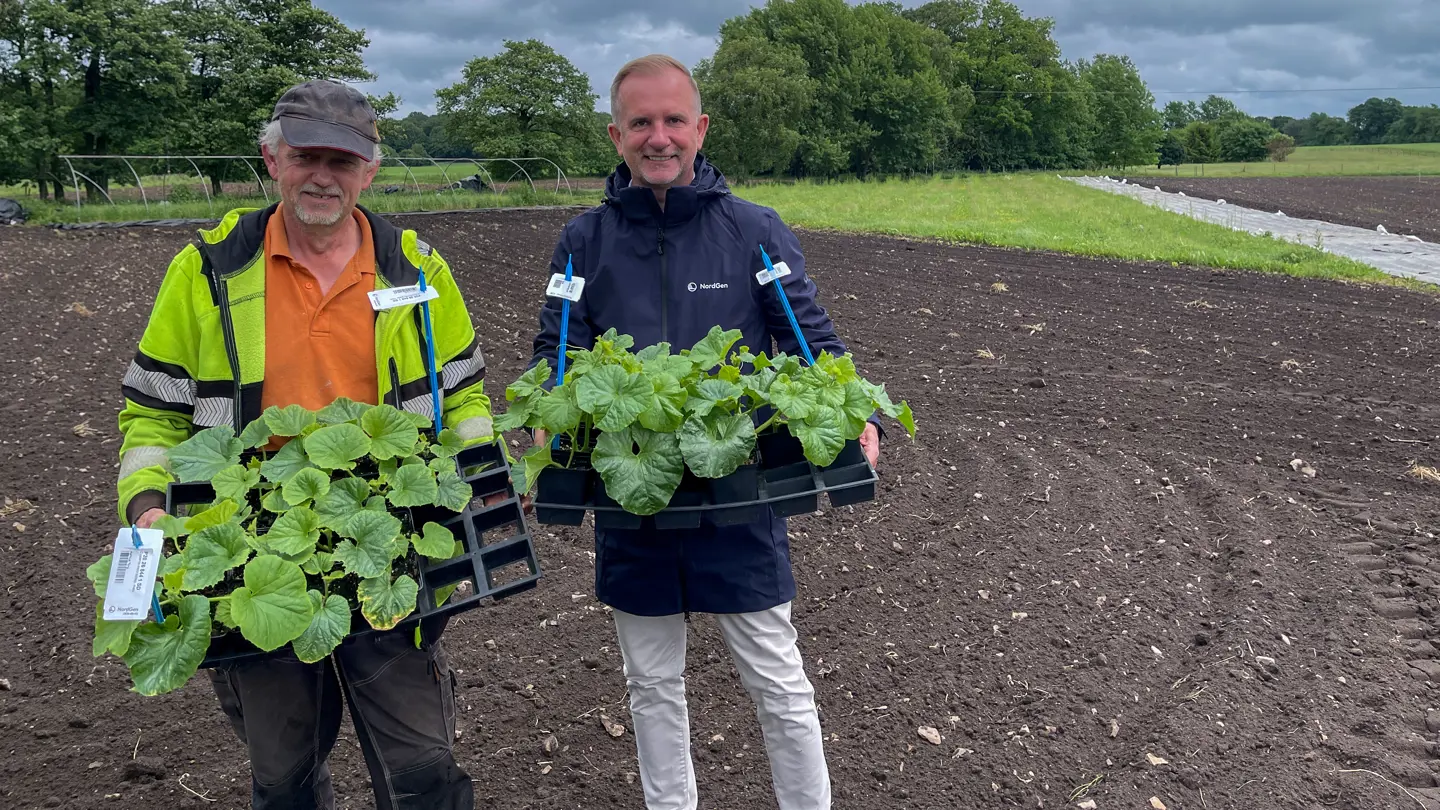
Therefore, twelve melon varieties with a history of Nordic cultivation are now being tested in greenhouse trials, complemented by open-field cultivation. These varieties have been preserved to this day thanks to the genebanks NordGen and IPK Gatersleben in Germany. After the autumn harvest, all varieties will be analysed based on yield, quality, aroma, and texture. A report will then compile the final results and provide practical guidance.
"A project like this, which reintroduces melon varieties with a Nordic cultivation history, can help revive melon production in the region," says Pawel Chrominski. "At the same time, the stories behind the varieties can help market them as exclusive products."
Fact box
Two of the varieties from NordGen's collection are:
Wests was developed by market gardener R. J. West in Svendborg, Denmark, and introduced in 1925. In Weibull’s catalogues, the fruits are described as "almost round, slightly netted, with a small seed cavity and orange-yellow flesh, with an average weight just under 2 kg. A good commercial variety with firm rind that withstands transport well."
Kungsmelon originated from Tullgarn in Sweden and was introduced in Weibull’s garden seed catalogue in 1935. The variety is described as a green-fleshed melon of exceptional flavor. The fruits are slightly oval and nearly smooth, with a light netting and yellow-grey outer color, and an average weight of 2 kg.