Fuglestadbrogete sheep
Fuglestadbrogete sheep is a Norwegian crossbred breed of English origin, introduced to Norway in 1909.
Hans Hansen from Fidsel near Flekkefjord in Norway purchased two ewe lambs and one ram lamb at an exhibition in Leeds. In 1921, he sold his flock (21 winter-fed sheep) to the butcher Voilås at Moi. The flock was later sold to Fuglestad in Bjerkreim and Kyllingstad in Gjesdal.
The interest group for Fuglestadbrogete sheep was founded in 1999, and the following year, the first breed show was arranged at the same time as the registration of ram lambs began. The breed was officially approved as its own breed in 2004, and today there are approximately 1,000 purebred ewes in Norway.
The breed is a good milker with strong maternal instincts, making it well-suited as a "mother breed." The sheep is described as alert and light-spirited.
Fuglestadbrogete sheep
Native name: Fuglestadbrogete sau.
Weight: 90-110 kg (ram) and 70-90 kg (ewe).
Appearance: High-set, elongated, and somewhat slender sheep of a light type. It is fine-boned with good leg positioning. It has crossbred wool, which can be somewhat coarse on the thighs. The base colour is white on the head and feet, with black markings that vary from mottled to completely solid-coloured head and legs – hence the name "brogete" (variegated/mottled). Some animals may have grey wool on the neck or grey/black spots over the entire body.
Type: Long-tailed, crossbred (i.e., single coated wool).
Number of breeding females (2024): 1,084.
Not at Risk – Vulnerable – Endangered – Critically Endangered – Extinct

Read more about our other native breeds
-
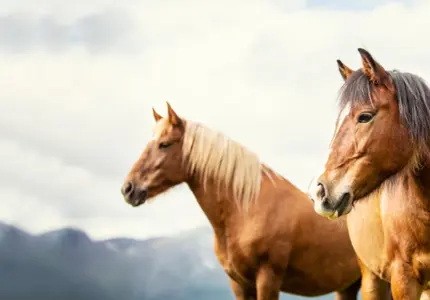
Nordland/Lyngen Horse
The first known and documented exhibition where this breed participated, was in 1898 at Lyngseidet in Troms. In the 1930s, organized breeding of Nordland/Lyngen horses started.
-
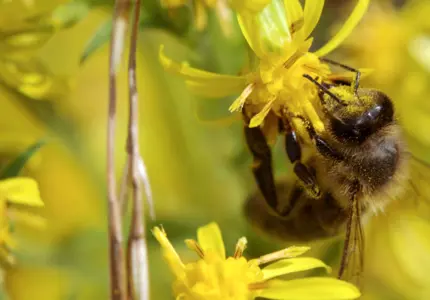
The Nordic brown bee
Honey bees are threatened by intensive agriculture, habitat loss and climate changes worldwide and are important to conserve, not only due to their honey production but also due to their pollination services.
-
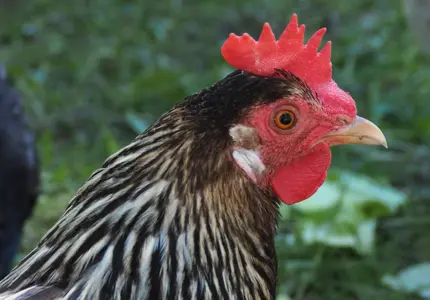
Finnish Landrace Chicken
In 1974, the agricultural advisory agency collaborated with Seiskari and published a call to find remains of the Finnish landrace chicken. As a result, one flock was found in South-East Finland. This family line was named after its geographical location as “Savitaipaleenkanta”.