Norwegian Cheviot
The Norwegian Cheviot is a foreign crossbred breed originating from the Cheviot Hills on the border between England and Scotland.
The first documented import to Norway occurred in 1854, but systematic breeding did not begin until the 1860s. The breed is therefore assumed to have less influence of Norwegian blood than the other breeds that emerged at that time. Since the population in Norway is relatively small, semen doses of British Cheviot are regularly imported from the United Kingdom to counteract an increase in inbreeding.
The Norwegian Cheviot has also contributed to the formation of the Dala, Steigar, and Rygja sheep. In Norway, the breed is most common on the west coast, and it is well adapted to the rough coastal climate, where it manages in areas with poor grazing quality. According to the breed standard, the Norwegian Cheviot should be a dual-purpose breed: well-built, with good carcass quality and good wool quality. The goal of breeding is for the breed to provide the owner with a good production economy. The breed currently accounts for about 2% of the sheep in Norway.
Norwegian Cheviot
Native name: Norsk sjeviot.
Weight: 100-130 kg (ram) and 75-85 kg (ewes).
Appearance: The breed is polled (hornless), and white with a black nose and black hooves. The hair on the head and legs is pure white. Typical characteristics include a clearly curved nasal profile (convex) and almost completely upright ears.
Type: Long-tailed, crossbred (i.e., single coated wool).
Number of breeding females (2024): 2,356.
Not at Risk – Vulnerable – Endangered – Critically Endangered – Extinct

Read more about our other native breeds
-
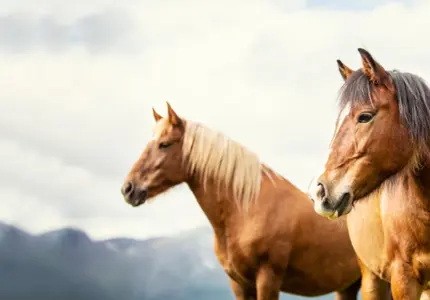
Nordland/Lyngen Horse
The first known and documented exhibition where this breed participated, was in 1898 at Lyngseidet in Troms. In the 1930s, organized breeding of Nordland/Lyngen horses started.
-
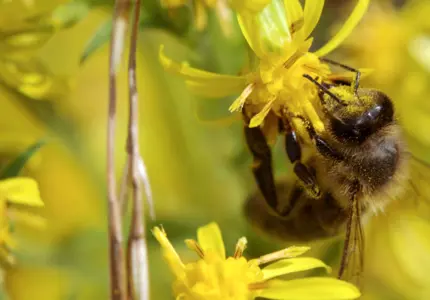
The Nordic brown bee
Honey bees are threatened by intensive agriculture, habitat loss and climate changes worldwide and are important to conserve, not only due to their honey production but also due to their pollination services.
-
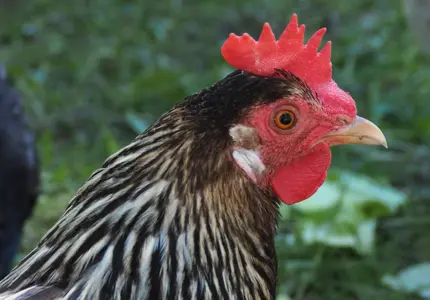
Finnish Landrace Chicken
In 1974, the agricultural advisory agency collaborated with Seiskari and published a call to find remains of the Finnish landrace chicken. As a result, one flock was found in South-East Finland. This family line was named after its geographical location as “Savitaipaleenkanta”.