Norwegian sheep breeds
The sheep is one of the oldest domesticated animals in Norway, and there are long traditions of caring for and using it for the production of both wool and meat.
It is believed that sheep arrived in Norway over 6,000 years ago. Since then, grazing and other uses of out-pasture have helped shape Norway's rich landscape.
There is relatively little agricultural land in Norway – only about 3% of Norway's land area can be used for cultivated soil. Fortunately, sheep can utilize vast resources in the wilderness that are not suitable for agriculture. This helps keep the landscape open and prevents overgrowth, which in turn promotes biological diversity among plants and smaller animals. As in Iceland, Norway has a long tradition of grazing, where sheep are released onto pastures in the spring and gathered again in the autumn.
Today, there are twelve sheep breeds that Norway has recognised as national sheep breeds:
• Dala sheep
• Rygja sheep
• Steigar sheep
• Norwegian White sheep (NWS)
• Bleset sheep
• Old Norwegian sheep
• Old Norwegian Spel sheep
• Norwegian Spel sheep
• Grey Trønder sheep
• Fuglestadbrogete sheep
• Norwegian Fur sheep
• Norwegian Cheviot
The breeds originate from different parts of the country, but for many, the exact origin is unclear due to limited historical documentation. Several of the older breeds have contributed to the formation of the newer, more commercial sheep breeds in Norway. For example, the most widespread breed, NWS, is built on influences from the Dala-, Rygja- and Steigar sheep. The Norwegian Spel sheep descends form the Old Norwegian Spel sheep, which in turn has roots in the oldest Norwegian sheep breeds, the Old Norwegian sheep (also known as Old Norse sheep).
Classification
Norwegian sheep breeds are roughly divided into two main groups: crossbred sheep (long-tailed) and spel sheep (short-tailed). Most of the breeds are of the crossbred type. These carry genetic traits from British breeds and are therefore long-tailed (the exception is the Grey Trønder sheep with a medium length tail).

Crossbred breeds have coarse, strong, crimped and even-length wool – also known as crossbred wool. Again, the Grey Trønder sheep is an exception, as it originates from the extinct Tautersheep (which was a Merino-type sheep). Therefore, despite being classified as a crossbred sheep, this breed is known to yield soft and shiny wool.
Four breeds, Norwegian Fur (or Pelt) sheep, Norwegian Spel sheep, Old Norwegian Spel sheep and Old Norwegian sheep – are spel-type sheep, and are short-tailed. These are related to the old Northern European Short-tailed sheep group, which has descendants across the entire Nordic region.
The spel-type sheep are known for having wool consisting of underwool and guard hairs. The sheep can often shed this type of wool entirely or partially on its own. Norwegian Fur sheep differ from the other Norwegian spel breeds by having a more uniform type of wool with shiny corkscrew curls, compared to the traditional spel sheep breeds.
Conservation efforts
All the breeds have active breed associations that work to distribute breeding stock and connect interested farmers. The breeding organisation Norwegian Sheep and Goat Association (NSG) has the overall responsibility for breeding work and assists the breed associations in selecting rams for semen collection. It is important to ensure access to semen rams to attain new breeding material and to manage restrictions on moving sheep between flocks.

Some of the breeds were previously critically endangered (for example, the Steigar sheep). For these, active conservation work has been crucial, and today none of the Norwegian breeds are classified as critically endangered. Important examples of breeds where conservation work has been successful are the Steigar sheep and Rygja sheep: before the summer of 2008, there was no overview of how many animals of these breeds existed in Norway, and the population status of the breeds was therefore unknown. Mapping conducted by the Norwegian Genetic Resource Centre has provided a good overview of both breeds, and the semen stored from older Steigar and Rygja rams from the 1980s and 1990s at NSG has been important for rebuilding the populations as they are known today.
Today, six breeds are considered to be at risk of extinction – the Steigar sheep, the Dala sheep, the Fuglestadbroget sheep, the Grey Trøndelag sheep, the Norwegian Cheviot and the Rygja sheep. These breeds have fewer than 3,000 breeding ewes in their populations. One breed, the Bleset sheep, can be considered vulnerable, with fewer than 6,000 breeding ewes in the population. The remaining five breeds are not threatened and have over 6,000 breeding ewes in the population.
Characterisation
According to the systematic study conducted by Kierkegaard et al. (2020), there are relatively few easily accessible studies that include the Norwegian sheep breeds that are threatened with extinction. The Dala sheep and Old Norwegian sheep are the most studied. Bleset sheep is the only endangered breed that has not been scientifically characterised, while Grey Trønder and Fuglestadbrogete sheep are included in only one study that assessed breed contribution to total genetic variation across national borders.

The Kierkegaard et al. study (2020) concluded that Fuglestadbrogete sheep contributes significantly to the total genetic variation. Several of the national breeds have also been included in important studies regarding prion protein polymorphism, molecular variation, and the preservation of diversity in complex populations.
Further investigation and characterisation of additional genes and important traits in sheep is necessary to improve future management and conservation of the breeds. Increased knowledge will strengthen conservation efforts and may also be useful for commercial breeds like the NWS, which originates from several of the older breeds. Since these breeds also form a part of Norway's cultural heritage, it is equally important to explore historical knowledge of their development and significance for human societies. By securing more in-depth socio-cultural knowledge, we are not only strengthening conservation efforts but also enhancing our understanding of broader societal development.
Fun facts
- Norwegian White sheep (NWS) is the most widespread breed, accounting for between 60-70% of the sheep population in Norway.
- Norwegian Spel sheep (white and coloured) account for approximately 13% of the Norwegian sheep population. It is a hardy breed with good flock dynamics.
- Old Norwegian sheep is considered our most original breed. It is easily recognisable by its characteristic horns.
- If you buy products labelled villsau (wild sheep), they come from Old Norwegian sheep, which helps preserve the coastal heathlands along the west coast of Norway.
Read more about our other native breeds
-
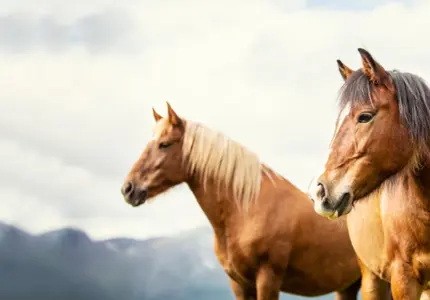
Nordland/Lyngen Horse
The first known and documented exhibition where this breed participated, was in 1898 at Lyngseidet in Troms. In the 1930s, organized breeding of Nordland/Lyngen horses started.
-
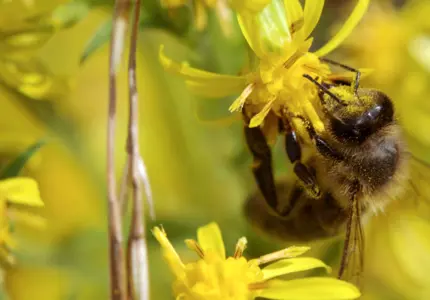
The Nordic brown bee
Honey bees are threatened by intensive agriculture, habitat loss and climate changes worldwide and are important to conserve, not only due to their honey production but also due to their pollination services.
-
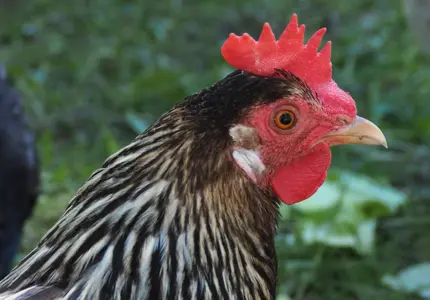
Finnish Landrace Chicken
In 1974, the agricultural advisory agency collaborated with Seiskari and published a call to find remains of the Finnish landrace chicken. As a result, one flock was found in South-East Finland. This family line was named after its geographical location as “Savitaipaleenkanta”.