Norwegian Spel sheep
The Norwegian Spel sheep is a Norwegian landrace sheep with elements of Icelandic sheep and Finnish landrace.
It is considered a descendant of the Old Norwegian Spel sheep. Until the 1950s, breeding work for these two breeds followed a similar development.
The Norwegian Spel sheep is divided into two subgroups, white Spel sheep and coloured Spel sheep. These groups have had individual breeding work even though the groups are closely related in size and characteristics, but since the white wool is often the one that yields better pay, there has been a desire to breed a purely white type.
Like its predecessor, the Norwegian Spel sheep has many good characteristics: The breed has good maternal qualities, few lambing difficulties, is light-footed, hardy and frugal, and exhibit good flock dynamics. The Norwegian Spel sheep is the most modern version of pure spel-type sheep in Norway, and is bred more towards production than the more original types (Old Norwegian sheep and Old Norwegian Spel sheep).
Norwegian Spel sheep
Native name: Norsk spælsau.
Weight: 60-70 kg (ewes).
Appearance: It was previously common for both rams and ewes to have horns, but in modern sheep this trait has largely disappeared. The most common colour is white, with a white nose and white hooves, but there are also other colour variations. It is common for the animals to have a crown cap, meaning that the top part of the skull is covered with wool.
Type: Short-tailed, double-coated.
Number of breeding females (2024): 55,356.
Not at Risk – Vulnerable – Endangered – Critically Endangered – Extinct

Read more about our other native breeds
-
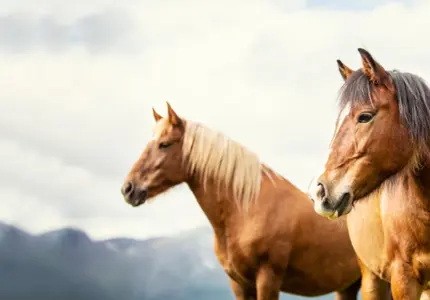
Nordland/Lyngen Horse
The first known and documented exhibition where this breed participated, was in 1898 at Lyngseidet in Troms. In the 1930s, organized breeding of Nordland/Lyngen horses started.
-
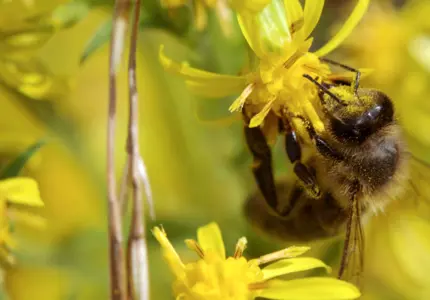
The Nordic brown bee
Honey bees are threatened by intensive agriculture, habitat loss and climate changes worldwide and are important to conserve, not only due to their honey production but also due to their pollination services.
-
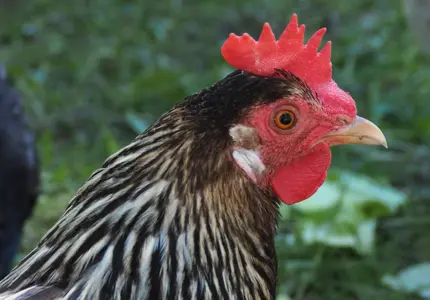
Finnish Landrace Chicken
In 1974, the agricultural advisory agency collaborated with Seiskari and published a call to find remains of the Finnish landrace chicken. As a result, one flock was found in South-East Finland. This family line was named after its geographical location as “Savitaipaleenkanta”.